Browse by topic
How devices are evolving
Nine announcements that redesign Google's physical ecosystem
Nine announcements that redesign Google's physical ecosystem
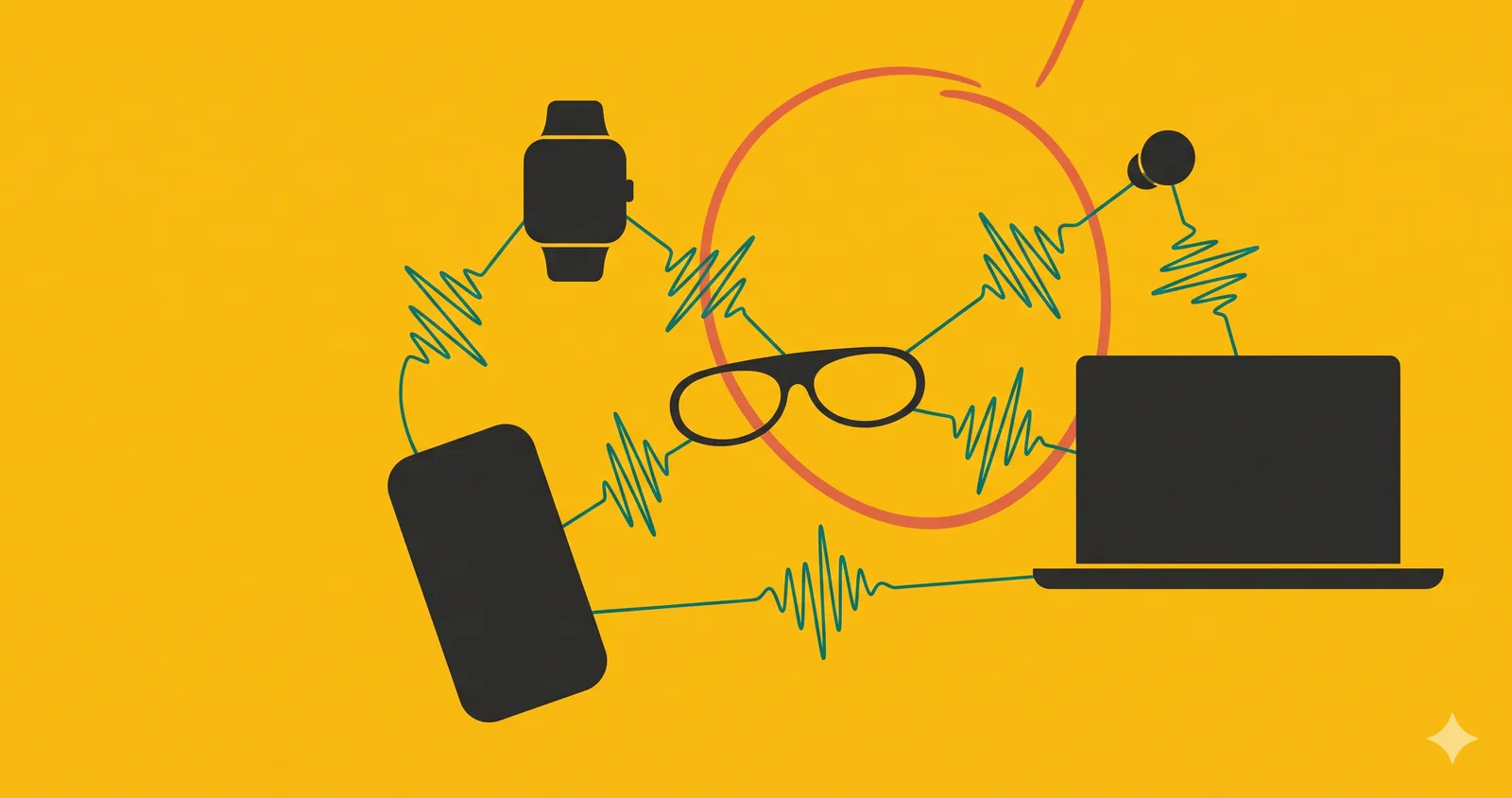
On the hardware front Google moved more pieces than it appears. Android 17 brings Create My Widget (custom widgets generated on command by Gemini), App Bubbles for foldables and tablets, Pause Point to interrupt compulsive app usage, and a Continue On that does what Apple Handoff has done for ten years — late, but finally done well. Android Auto gets a Material 3 Expressive redesign. Wear OS 7 drops Tiles in favor of 2x1 and 2x2 widgets and claims 10% more battery. On the XR front, Android XR audio glasses debut with Samsung, XREAL, Warby Parker, Gentle Monster; Project Aura exits concept phase with see-through displays. Googlebook with Aluminium OS replaces Chromebook. Google Health takes over from Fitbit with AI Coach and the Fitbit Air tracker at $99.99. And on the smart-home front: the Gemini built-in program opens the Speaker Reference Design to third-party partners, with Walmart Onn the first onboard. Nine announcements saying one thing: Google AI goes where the users are.
Google announces the Gemini built-in program: a Speaker Reference Design that lets hardware partners build speakers with the full Gemini voice experience, plus opening some of the most powerful smart-home features to developers. Walmart Onn is the first onboard. Alongside arrives the new Google Home Speaker at $99.99.
Announced in the What's New in Android session on day two of I/O 2026, the new feature lets users hand an app from one Android device to another without interrupting the task. The first step toward the kind of system-level continuity Android has lacked for a decade.
The most substantial update in years for Google's in-car platform: a new visual language, customizable widgets, FHD YouTube video while stationary, and Dolby Atmos spatial audio on a first wave of automakers.
At I/O 2026, XREAL and Google showed Project Aura not as a slide deck but as a real product: Android XR glasses with optical see-through displays, a 70-degree field of view, and a small external compute puck tethered by cable. Global launch is targeted before the end of 2026, with dev kits handed out through the new Android XR Developer Catalyst Program.
Starting May 19 the Fitbit app becomes Google Health. The centerpiece is a Gemini-powered generative coach that integrates with Apple Health and Health Connect. A new screenless tracker, Fitbit Air, launches at $99.99 and is built around always-on conversations with the coach.
Google rebuilds the smartwatch interface: full-screen Tiles are gone, 2x1 and 2x2 widgets arrive, and Android's dynamic notifications land on the wrist. 10% better battery life promised — Gemini Intelligence reserved for a select set of 2026 watches.
Acer, ASUS, Dell, HP, and Lenovo will launch a new category of premium laptops this fall with Android repackaged for the desktop. Gemini integrated at the OS level, Magic Pointer, the entire Play catalog running natively.
Three substantial novelties: custom widgets generated on command by Gemini, floating windows for multitasking on foldables and tablets, and a forced 10-second pause before opening apps that have taken too much of your time.
First-generation audio-only — no built-in display. Intelligence travels from the phone via Gemini. Four industrial partners, design close to Ray-Ban Meta.
Shopping becomes an agentic service
Workspace becomes an automation factory
The personal assistant stops answering and starts acting
Building software stops resembling writing and starts resembling directing
The web gears up to be read by agents
Models, chips, and business models: Google chooses where to make margin
Content creation becomes modular
Provenance, safety, and AI for science: the responsibility front